Attachment Styles in Online Dating: How They Shape Your Matches (2026)
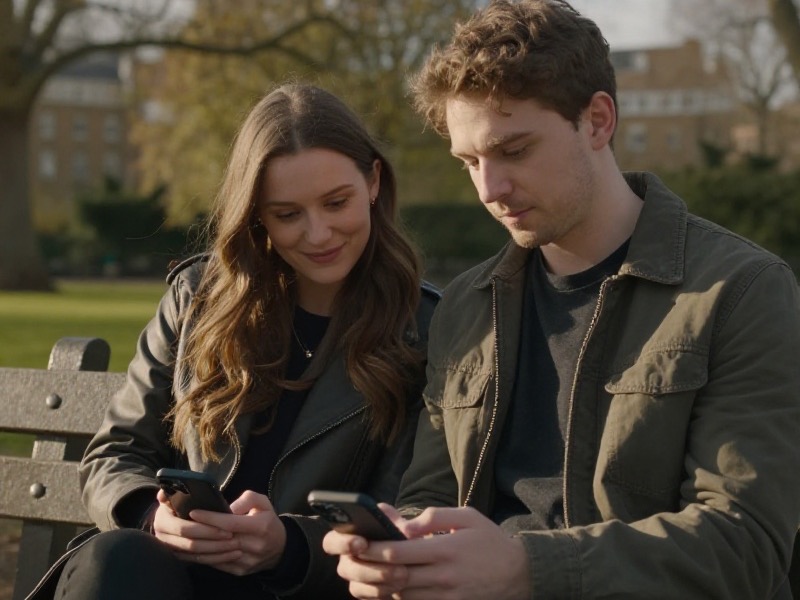
Your attachment style, the pattern you learned as a child for handling closeness and separation, quietly runs the show on every dating app you open. It decides how fast you reply, whether a six-hour gap feels like rejection, and whether meeting up feels exciting or terrifying. Psychologists Cindy Hazan and Phillip Shaver showed in 1987 that adult romantic bonds follow the same attachment patterns Mary Ainsworth had mapped in infants a decade earlier: secure, anxious and avoidant, later joined by a fourth style called disorganised. This guide breaks down how each pattern plays out in real app behaviour, how to spot your own style, and which pairings tend to struggle hardest.
What are attachment styles, and why do they shape your matches?
Attachment styles are the habitual ways people manage closeness and separation, formed early in life and carried into adult relationships largely unchanged. British psychologist John Bowlby proposed the theory in 1969, and Mary Ainsworth's 1978 "Strange Situation" experiments identified the first three patterns. On a dating app, that early blueprint quietly decides who chases, who withdraws, and who stays calm when a reply takes hours.
The British Psychological Society (2023) describes attachment theory as one of the most extensively tested frameworks in relationship psychology, used everywhere from couples counselling to workplace research. Hazan and Shaver's original 1987 study found roughly 56 percent of adults were securely attached, 25 percent avoidant, and 19 percent anxious. Similar proportions still turn up in later research, which is why the four styles are worth learning before you swipe again.
The four attachment styles in a nutshell
- Secure: comfortable with both closeness and independence, communicates needs directly, and doesn't panic over a slow reply.
- Anxious: craves closeness and reassurance, often reads neutral silence as rejection, and may over-text or seek constant validation.
- Avoidant: values independence highly, pulls back when things intensify, and keeps emotional distance even while staying in contact.
- Disorganised: wants closeness and fears it at the same time, sending mixed, push-pull signals that confuse both people involved.
How does anxious attachment show up on dating apps?
Anxious attachment shows up as heightened sensitivity to any gap in contact, often triggering over-texting, rapid follow-up messages, or requests for reassurance. Ofcom (2024) reports that the vast majority of UK adults now go online every day, which means most of this anxiety plays out in real time, on a phone, within minutes of a message landing.
For someone with an anxious style, a slow reply rarely reads as "they're busy". It reads as "they've lost interest", and that interpretation feels like fact rather than a guess. Pew Research Center (2023) found many online daters describe the whole experience as more frustrating than fun, and constant watchfulness about reply speed is a big part of why. The pattern isn't neediness for its own sake. It's a nervous system on alert.
Common anxious patterns to notice
- Checking the app repeatedly within minutes of sending a message.
- Sending a second or third message before getting a reply to the first.
- Reading a short or delayed reply as proof of rejection.
- Feeling calm again only once reassurance arrives, then repeating the cycle soon after.
- Agreeing to plans quickly to lock in the connection before it "disappears".
How does avoidant attachment show up on dating apps?
Avoidant attachment shows up as a preference for distance dressed up as busyness, with slow replies, short answers, and reluctance to firm up plans. Statista (2025) puts the number of UK online dating users above seven million, and within that crowd, avoidant daters are often the ones quietly juggling several matches so they never have to depend on just one.
Where an anxious person chases closeness, an avoidant person manages closeness by keeping a foot out the door. Conversations can feel warm one week and distant the next, a pattern often called hot-and-cold. It isn't deliberate cruelty. It's a strategy, learned early, for staying safe by never fully leaning in.
Common avoidant patterns to notice
- Taking a day or more to reply, then acting as if nothing happened.
- Keeping conversation friendly but avoiding deeper personal questions.
- Cancelling or postponing plans to meet in person more than once.
- Pulling back noticeably right after a conversation gets emotionally close.
- Keeping several matches going at once rather than focusing on one.
What do secure and disorganised attachment look like online?
Secure attachment looks almost boring by comparison: consistent replies, direct communication, and no panic when a message takes a while to land. Hazan and Shaver's 1987 research found securely attached adults reported the longest, most stable relationships of the three original styles, and that stability starts with how they handle a dating app.
A securely attached match says what they mean. If they're busy, they say so. If they like you, they tell you, rather than leaving you to decode a string of emoji. They can handle a slower week from you without spiralling, and they can also say when something isn't working, instead of vanishing.
Secure attachment signs
- Replies are consistent in timing, not wildly fast one day and silent the next.
- They state their intentions plainly rather than leaving you to guess.
- A slower week from you doesn't trigger accusations or sudden coldness.
- They can disagree or set a boundary without disappearing afterwards.
Disorganised (fearful-avoidant) signs
Disorganised, or fearful-avoidant, attachment blends anxious craving with avoidant fear, often rooted in earlier relationships where closeness felt both wanted and unsafe. The British Psychological Society (2023) notes this style is less common than the other three but shows up clearly in push-pull dynamics: intense pursuit followed by sudden withdrawal, sometimes within the same week.
- Intense early interest that suddenly cools without much explanation.
- Wanting to talk constantly, then going quiet for days at a time.
- Mixed signals: saying they want closeness while acting distant in practice.
- Difficulty trusting reassurance even when a partner offers it consistently.
Whichever pattern you recognise, the app you use shapes how much ambiguity you have to sit with. Platforms that require a mutual match before any chat begins, like DateWiz, remove some of the guesswork that anxious and disorganised styles find hardest, because you already know there's mutual interest before the conversation even starts.
How can you find out your own attachment style?
The fastest way to identify your attachment style is to notice your instinctive reaction to distance, not your ideal self-image. Psychologists commonly use self-report tools such as the Experiences in Close Relationships questionnaire, built on the same research Hazan and Shaver started in 1987, to map where someone sits between anxious and avoidant.
You don't need a clinical questionnaire to get a useful read on yourself. Think back to your last three matches or relationships, and notice what you actually did when contact slowed down. Did you panic and reach out more? Pull back and go quiet? Stay roughly the same either way? That instinct, not the person you'd like to be, is your honest starting point.
A five-minute self-check
- When a reply doesn't arrive for a day, my first thought is usually "something's wrong" (anxious lean) or "no big deal" (secure lean).
- When someone wants to talk every day, I feel comforted, or I feel crowded.
- After a good date, I look forward to the next one, or I start finding reasons to slow things down.
- I find it easy, or genuinely hard, to say plainly what I want from someone.
- Conflict makes me chase for resolution immediately, or makes me want space first.
None of these answers is a diagnosis. Most people lean toward one style but shift slightly depending on who they're with. A calm, consistent match can bring out someone's more secure side, while an inconsistent one can trigger anxious or avoidant habits that don't usually show up. Context matters almost as much as history.
Why is the anxious-avoidant pairing the hardest trap to escape?
The anxious-avoidant pairing is the hardest because each style's coping strategy triggers the other's worst fear, creating a loop that feels intense but rarely feels stable. Hazan and Shaver (1987) noted this pull as one of the more consistent findings in attachment research: anxious and avoidant partners are often drawn to each other precisely because the dynamic feels familiar.
Here is the trap. The anxious partner senses distance and reaches for more contact, more reassurance, more certainty. The avoidant partner senses that pressure and pulls back to protect their independence. That withdrawal confirms the anxious partner's fear, so they reach harder. The reaching confirms the avoidant partner's fear of being smothered, so they pull further away. Both people can be doing their honest best and still end up worse off after every exchange.
Breaking the cycle
- Name the pattern out loud instead of acting it out silently: "I notice I chase when you go quiet."
- Agree on a rough, realistic response window instead of guessing at each other's intentions.
- The anxious partner practises sitting with uncertainty for an hour before sending a follow-up message.
- The avoidant partner practises staying present for one more exchange instead of the usual retreat.
- If the loop repeats after real effort from both sides, that's useful information, not failure.
What actually helps you date more securely?
What helps most is treating security as a skill you build through practice, not a fixed trait you're stuck with. Psychologists call this earned secure attachment, and research summarised by the British Psychological Society (2023) suggests consistent, low-drama relationships can shift someone's patterns over time, even after an anxious or avoidant start.
Small, repeatable habits matter more than big declarations. Say what you mean instead of hinting and hoping it lands. Give a slow reply the benefit of the doubt before assuming the worst. Notice your own urge to chase or withdraw, and pause before acting on it. None of this fixes years of patterning overnight, but each small choice nudges you toward calmer, steadier connections.
Practical steps toward earned secure attachment
- Communicate your needs plainly instead of testing whether someone can guess them.
- Give ambiguous messages a neutral interpretation before assuming rejection or disinterest.
- Notice your first instinct under stress, then choose your actual response deliberately.
- Pick platforms and habits that reduce unnecessary guesswork about someone's intentions.
- Be patient with slow progress; attachment patterns built over years shift gradually, not instantly.
The environment you date in also matters more than most people realise. On DateWiz, chatting only opens after a mutual match, profiles are moderated, and your phone number stays private throughout, which removes several of the ambiguous signals that anxious and avoidant styles tend to misread. It won't rewrite your attachment history, but it can make the next few matches a calmer place to practise.
Whatever pattern you recognise in yourself, the goal isn't to force secure behaviour overnight. It's to notice the pattern, name it kindly, and choose a slightly steadier response each time it shows up.