The Ick in UK Dating: Why Attraction Vanishes in Seconds
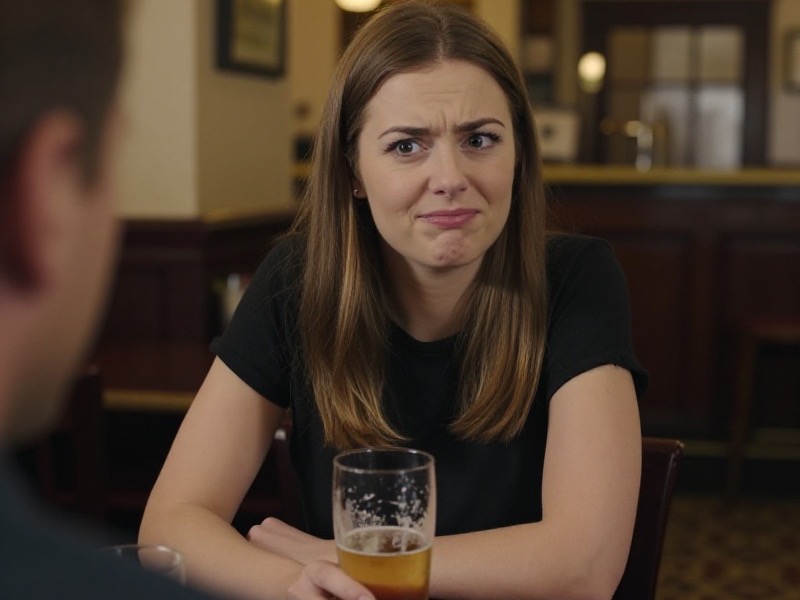
The ick is the sudden collapse of attraction to someone you fancied ten minutes earlier, triggered by something trivial: how they said a word, how they stood at the bar, a text that landed wrong. Britain gave the phrase its modern life, and British daters now use it constantly. Here is where it came from, what is actually happening in your head when it fires, which icks carry real information, and what to do with the ones that do not.
Where did the ick come from, and why does it feel so British?
The word itself is older than the meme. American television used it in the early 2000s, but it became everyday British vocabulary through reality TV, above all ITV2's Love Island, where contestants have been announcing icks on national television since the late 2010s. From there it travelled to TikTok and back into ordinary conversation.
YouGov's polling on dating language (2025) shows how widely recognised the term now is among UK adults, especially under-35s, who use it as casually as they use fancy or fit. The register is unmistakably British: understated, faintly cruel, delivered deadpan. Noticing small absurdities in other people is close to a national pastime, and the ick gave that instinct a name.
Naming it changed behaviour, which is the part worth taking seriously. Once a feeling has a label, people notice it more often, discuss it with friends, and treat it as legitimate grounds to end things. That makes the ick genuinely useful when it points at something real, and genuinely destructive when it does not.
How common is the ick among UK daters?
Common enough that it now functions as a standard reason to stop replying. Ofcom's Online Nation research (2024) found that dating services reach millions of UK adults every month, with Tinder, Hinge and Bumble the most visited, alongside smaller players such as Thursday, Feeld and Muzz. That is a very large number of first meetings, and therefore a very large number of opportunities for attraction to switch off in a pub.
The wider picture explains why those meetings carry more weight than they used to. Office for National Statistics data (2024) shows people in the UK partnering later, with average age at first marriage now past 30 for both partners, and roughly eight million people living alone. More adults spend more years actively dating than any previous generation did.
Volume does the rest. Statista (2024) puts the UK online dating market in the hundreds of millions of pounds a year, and DataReportal's Digital 2026 report has the average UK adult online for close to six hours a day. Those are precisely the conditions the ick thrives in: plenty of candidates, constant evaluation, and very little patience.
What is actually happening when the ick fires?
It borrows the machinery of disgust
Notice the word people reach for. Not doubt, not hesitation, but ick. Paul Rozin's research at the University of Pennsylvania showed how readily physical disgust transfers to social and moral judgements, and Mark Schaller's work at the University of British Columbia describes a behavioural immune system, a set of fast aversive reactions that pull us away from anything flagged as off before conscious thought arrives. Attraction and disgust cannot share the same room, which is why the ick feels absolute rather than debatable.
Most icks are about you, not them
Watching someone fumble their card at the bar is not objectively repellent. What lands is a flash of imagined embarrassment: standing next to that, introducing that to your mates, explaining that at Christmas. The trigger is a projection about your future social self rather than a fact about the person in front of you.
The timing that gives it away
Pay attention to when it arrives. Research in the Journal of Social and Personal Relationships (2023) on avoidance in early relationships describes how people who find closeness uncomfortable withdraw just as things go well, generating reasons after the fact. If your ick reliably appears the morning after a genuinely good date, or immediately after either of you said something honest, the trigger was the excuse. The closeness was the cause.
What gives British daters the ick?
Reported triggers split cleanly into two groups, and telling them apart is the whole skill. Britain is a country organised around queues and rounds, so behaviour in those two settings reveals more about someone than an hour of conversation does.
Icks that are pure noise
- Movement. How they run for the bus, dance at a wedding, or carry a tote bag.
- Vocabulary. A word they overuse, calling their ex the missus, saying they are a bit of a foodie.
- Small fumbles. Mispronouncing something on the menu, a joke that dies, over-explaining a story.
- Enthusiasm. They visibly like you and say so, which is a compliment, not a defect.
- Aesthetic detail. The trainers, the phone case, the way they hold a pint glass.
- Nerves. Talking too fast, apologising too much, checking the time twice.
Icks that are genuinely information
- How they treat bar and waiting staff. Curtness here predicts curtness with you.
- Queue behaviour. Pushing in, or getting theatrically annoyed at someone who does.
- The round. Not because of money, but because keeping score out loud says something.
- Contempt for an ex. Every previous partner described as mad or a nightmare is a pattern, not a coincidence.
- Banter as a shield. A remark that stings, followed by only joking when you react.
- Ignoring a small no. Another drink, a lift home, one more hour, after you have already declined.
The second list is not really the ick at all. It is judgement doing its job, and it deserves to be trusted.
Why does the ick fire faster than it used to?
Because online dating manufactures the conditions. You spend a week assembling a person out of six photographs and a text thread, and your brain quietly fills every gap with someone smoother and funnier than anyone real. Then you meet a human being who was never going to match the draft. The ick lives in that gap.
Messaging also strips out tone, timing, posture and pace, which is most of what attraction actually runs on. Someone can be brilliant in writing and completely flat across a table without either version being dishonest. The written version was simply a very small sample.
Then there is abundance. When the queue behind a person feels endless, a minor oddity becomes a reason to move on rather than something you would once have shrugged off. It helps to date somewhere the stakes are lower and nothing is behind a paywall, so an ick means you politely move on rather than feeling you have wasted a subscription. DateWiz, a free dating bot on Telegram, only opens a chat once interest is mutual, which quietly reduces the volume of throwaway matches.
Real signal or self-sabotage? Five honest questions
Before you act on the feeling, put it through this. Answer quickly, because the first answer is usually the true one.
- Could you still defend it in a fortnight? Said out loud, in daylight, to a friend who likes you both.
- Is it about them, or about being seen with them? Worrying about your image is projection, not incompatibility.
- Values or aesthetics? Dishonesty and contempt are signals. Posture and handwriting are not.
- Did it arrive right after things went well? That sequence points at avoidance rather than at them.
- Is this the fourth person in a row? A repeated pattern is about you, however different the triggers look.
The rule of thumb: an ick you can explain without embarrassment is usually a judgement worth keeping. One that sounds ridiculous the moment you say it aloud is usually a reflex worth ignoring.
Why British politeness turns the ick into a slow fade
Here is the distinctly British problem. Rather than have one direct conversation, we would sooner endure three weeks of thinning replies, a cancelled Sunday and a vague message about a mad week at work. Research in the Journal of Social and Personal Relationships (2023) links this kind of withdrawal to conflict avoidance, and politeness culture makes it worse, because saying nothing feels like good manners.
It is not good manners. Ambiguity costs the other person far more than a clear answer would. They reread the thread, invent explanations, and usually blame themselves for something that was never about them.
Two lines are enough: it has been lovely meeting you, but I do not think we are a romantic match, and I wish you all the best. Send it, then leave the conversation alone. Whatever you do, never name the trigger. Nobody has ever felt better for learning that it was the way they said pasta.
Can the ick ever pass?
Sometimes, and the source of it predicts whether it will. Icks rooted in projection, nerves or avoidance often dissolve entirely once you recognise the feeling underneath, and plenty of long marriages contain an early evening where one person nearly walked away over something absurd. Icks rooted in observed behaviour, particularly how someone treats people with less power than them, never fade. Those get louder.
If you are unsure, run a cheap experiment. Meet once more somewhere different, ideally with an activity in it, because a loud pub on a Friday is an interview and almost everyone performs badly in interviews. Check the timeline against your own week too, since an ick that arrives during a rough patch deserves scepticism.
What never works is arguing yourself into attraction. Deciding you ought to fancy someone produces resentment on both sides. Interrogate the ick once, honestly, and if it survives that, believe it. And if the constant low-grade judging is what is actually exhausting you, changing the setting helps more than lowering your standards. The free DateWiz bot on Telegram keeps matching and messaging cost-free inside an app you already have, which makes conversations feel less like transactions and rather more like meeting someone.